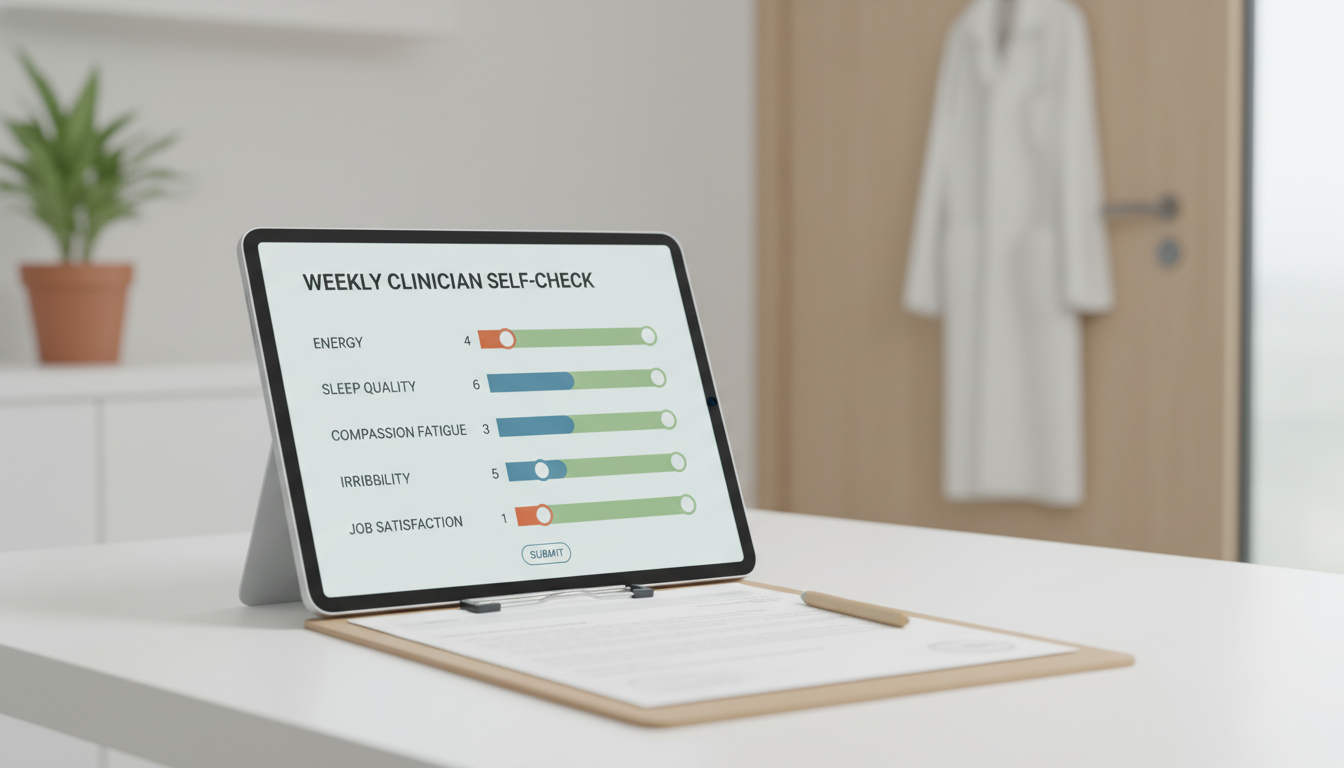
Next, look for the quiet shifts that show up in the work before anything looks “bad” on paper. Burnout often shows up as a slow move from thoughtful, individualized care to a more automatic style, especially at the end of a long week or after back-to-back high acuity sessions.
Common subtle practice shifts to watch for:
Writing treatment plans that sound generic across clients, with fewer client-specific details
Choosing the “safe” intervention you already know instead of trying a new angle when the case is stuck
Doing more checklist work (forms, measures, notes) and less clinical thinking
Feeling like you are “going through the motions,” even when the session is technically fine
Tradeoff to keep in mind: standard protocols can be helpful when you are tired, but if every client starts getting the same plan, you lose precision. If you do one thing, do this: pick one current case and add two concrete client-specific details to your plan today (a goal tied to their values, and one measurable marker you will review in 2 weeks).
But burnout rarely stays contained to the session. It often leaks into relationships at work in ways that feel like “I’m just busy,” when it is really a change in how safe and connected you feel with other clinicians.
Relational fallout can look like:
Skipping consults, arriving late to case conference, or keeping your camera off more often
Pulling back in supervision, bringing fewer questions, or avoiding the cases you feel uncertain about
Feeling irritated or shut down when you get feedback, even when it is fair
Sharing less with colleagues because it feels like one more thing to manage
Common mistake: waiting until you feel better to reconnect. Fix: set a small, time-boxed contact point. For example, bring one 5-minute supervision question each week (one stuck moment, one hypothesis to test), or ask a colleague for a 10-minute consult on a single decision. If you’re short on time, skip a full debrief and just name the one thing you want eyes on.